It is a common and direct question: does a dental implant hurt?
Fear of pain is one of the main reasons patients put off replacing a lost tooth. The image people associate with the procedure is often more invasive than the clinical reality.
Placing a dental implant is a surgical procedure, but it is performed under local anesthesia with a controlled technique. There is some discomfort, but it is usually different from what many people imagine.
Understanding how the anesthesia works, what the recovery is like and how long the sensitivity lasts helps you make a decision based on information, not fear.
Does a dental implant hurt during surgery?
During surgery, there is no pain.
The procedure is performed under local anesthesia, similar to that used for extractions and other dental treatments. It completely blocks sensation in the area where the implant will be placed.
The patient may feel pressure or vibration while the bone is being prepared, but not pain. This sensation tends to feel strange psychologically rather than physically uncomfortable.
In many cases, the level of discomfort is comparable to a simple extraction. Today’s surgical technique is minimally invasive and planned in advance with imaging exams, which reduces unnecessary trauma to the tissues.
When the procedure involves an immediate load implant, fitting the temporary tooth on the same day does not increase pain during surgery. The surgery is still performed under anesthesia, and the prosthesis is adjusted without causing sensitivity.
Discomfort, when it appears, usually occurs after the anesthetic wears off — and that is what we will look at next.
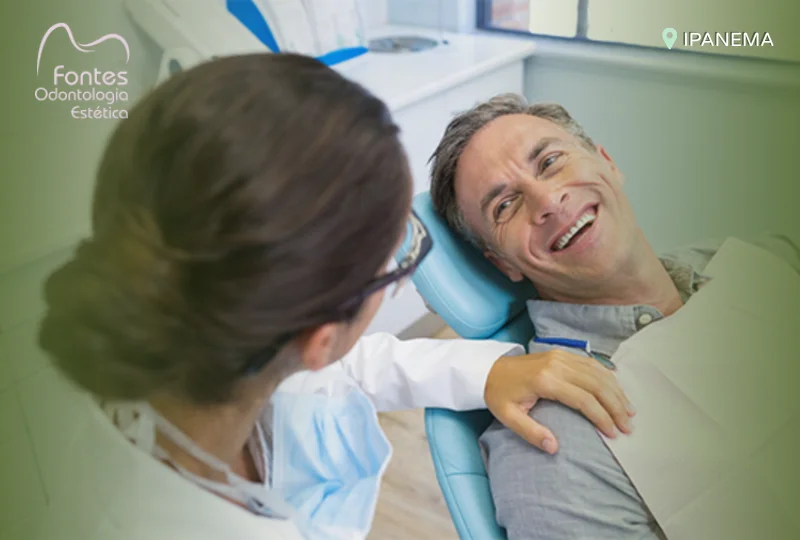
And after surgery? What is the pain like during recovery?
Once the local anesthesia wears off, it is normal to feel some discomfort.
Pain after a dental implant is usually described as mild to moderate, similar to a feeling of pressure or inflammation in the treated area. In many cases, it is comparable to the recovery from a simple extraction.
Discomfort usually peaks in the first 24 to 48 hours. During this period, there may be:
-
Tenderness to the touch
-
Slight swelling of the gum
-
Some difficulty chewing on the treated side
The intensity varies according to factors such as the number of implants placed, the need for a bone graft and the individual inflammatory response.
With an immediate load implant, the temporary tooth fitted on the same day does not usually increase pain. What requires attention is avoiding chewing overload in the first few weeks, following clinical guidance.
Prescribed painkillers and anti-inflammatories usually control the discomfort well. For most patients, the pain gradually decreases after the first few days.
If the pain gets worse over time, or comes with discharge or significant swelling, a clinical reassessment is important — as this falls outside the expected recovery pattern.
🦷 Related treatment in Ipanema: Dental Implants · Single Dental Implant
Does a dental implant hurt more than an extraction?
In most cases, no.
Many patients report that recovery from a dental implant is similar to — or even more comfortable than — recovery from a conventional tooth extraction.
This is because an extraction removes a structure that is already inflamed or compromised. An implant is a planned procedure performed in a controlled environment, with a precise technique and less unnecessary handling of the tissues.
In addition, when the implant is placed in an area that has already healed, the surgical trauma tends to be predictable and limited. Discomfort is usually concentrated in the first few days and responds well to the prescribed medication.
In cases involving a bone graft or multiple implants, recovery may be a little more sensitive, but still within a manageable range.
The perception of pain varies from person to person, but the idea that “an implant hurts much more than an extraction” does not match the clinical experience of most patients.
How long does the pain last after a dental implant?
In most cases, the discomfort is temporary.
After a dental implant is placed, pain is usually most noticeable in the first 24 to 48 hours. This is when the body’s inflammatory response is strongest.
Over the following days, it tends to decrease gradually.
In simple procedures, with a single implant and no need for a bone graft, many patients report significant improvement by the third day. Residual sensitivity may last a few more days, but it generally does not interfere with daily activities.
When treatment involves multiple implants or complementary procedures, such as bone regeneration, recovery may take a little longer. Even so, the expected pattern is pain that can be controlled with the prescribed medication.
It is important to tell normal discomfort apart from a warning sign.
What is expected:
-
Mild sensitivity when chewing
-
Slight local swelling
-
Mild tenderness to the touch
What should be assessed:
-
Intense pain that gets worse after the third day
-
Increasing swelling
-
Discharge or fever
Following post-operative instructions correctly reduces the risk of complications and contributes to a smoother recovery.
Does an immediate load implant hurt more?
Not necessarily.
Receiving a temporary tooth on the same day does not make the procedure more painful. Placing an immediate load implant follows the same surgical principle as the conventional protocol: local anesthesia, control of the surgical field and a minimally invasive technique.
The difference lies in the functional phase.
Because a fixed temporary tooth is fitted right after surgery, the patient needs to be extra careful when chewing in the first few weeks. The feeling of the tooth’s “presence” may cause slight sensitivity to touch or pressure, but this does not mean more intense pain.
Post-operative discomfort is still mainly related to the handling of bone and gum, not to the placement of the temporary tooth.
When the case is well indicated and there is adequate primary stability, the recovery experience is usually similar to that of a conventional implant.
What really influences recovery is the number of implants placed, the need for a graft and the body’s individual response — not whether the prosthesis was fitted on the same day.
When can pain indicate a problem?
Although some discomfort is expected after surgery, persistent or increasing pain should not be ignored.
In the first few days, it is normal to feel local sensitivity, slight swelling and some limitation when chewing. The expected pattern is gradual improvement. When the pain decreases day by day, it means healing is progressing as planned.
Some signs, however, deserve clinical attention:
-
Intense pain that increases after the third or fourth day
-
Swelling that increases instead of going down
-
Discharge or a persistent unpleasant taste
-
Fever or feeling generally unwell
These symptoms may indicate more significant inflammation or difficulty with osseointegration.
It is important to stress that complications are uncommon when the procedure is well planned and post-operative instructions are followed correctly. Even so, any symptom outside the normal pattern should be assessed.
If in doubt, the right course of action is to get reassessed — not to wait for the pain to “go away on its own”.