

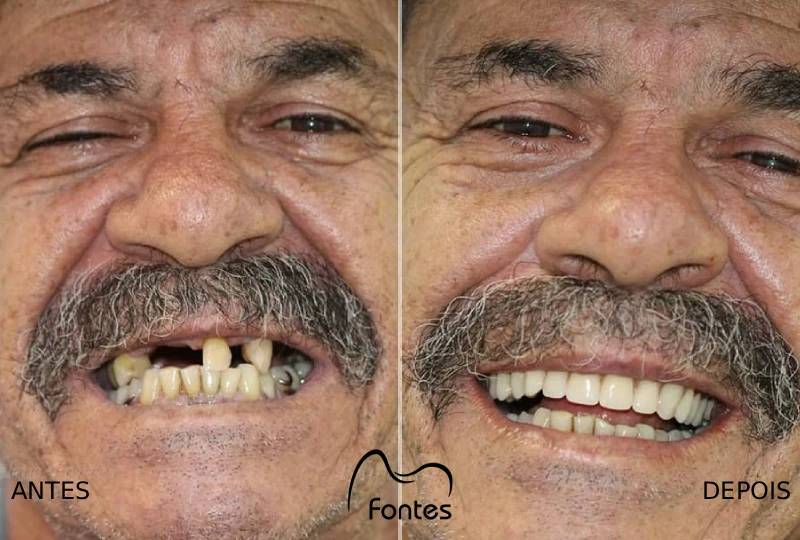
Losing teeth can affect not only the appearance of your smile, but also chewing, speech and self-esteem. Fortunately, modern dentistry offers several dental prosthesis options to restore function and beauty to your smile. In this article, you will learn what a dental prosthesis is, which types are available, how to choose the best option for your case and the essential care to ensure it lasts.
What is a dental prosthesis?
A dental prosthesis is a device used to replace one or more missing or damaged teeth, and it is an effective solution for both aesthetic and functional purposes. These devices can be fixed or removable, partial or full, and are recommended according to each patient’s needs. Their main goal is to restore the harmony of the smile and chewing function, and to preserve overall oral health.
Contrary to what many people think, dental prostheses have advanced considerably in recent years. Today they are made with modern, biocompatible materials such as porcelain, zirconia and high-performance resin, which ensure greater durability, strength and an extremely natural appearance. This means that, in addition to providing a discreet and elegant aesthetic result, they also offer comfort in daily use, fitting perfectly in the mouth.
Getting a dental prosthesis goes far beyond aesthetics. It can significantly improve chewing and speech, two fundamental functions that can be impaired by missing teeth. It also contributes to the patient’s self-esteem and confidence, promoting well-being and quality of life. People who wear a good prosthesis often say they feel more comfortable smiling, talking and eating in public.
In addition, a dental prosthesis plays an essential role in maintaining bone structure and the position of the remaining teeth. When a tooth is lost and not properly replaced, the neighboring teeth tend to drift into the empty space, which can cause misalignment, bite problems and even bone loss over time. A prosthesis prevents these problems and helps preserve the balance of the dental arch.
That is why investing in a quality dental prosthesis, with the support of an experienced dentist, is essential for anyone who wants to regain their smile, the function of their mouth and confidence when speaking or chewing. With the options available today, it is possible to find a personalized, discreet and effective solution for every case.
Types of dental prostheses available
There are different types of dental prostheses, and choosing the most suitable one depends on factors such as the number of missing teeth, the bone structure and the patient’s lifestyle. Below we explain the main options:
Full denture
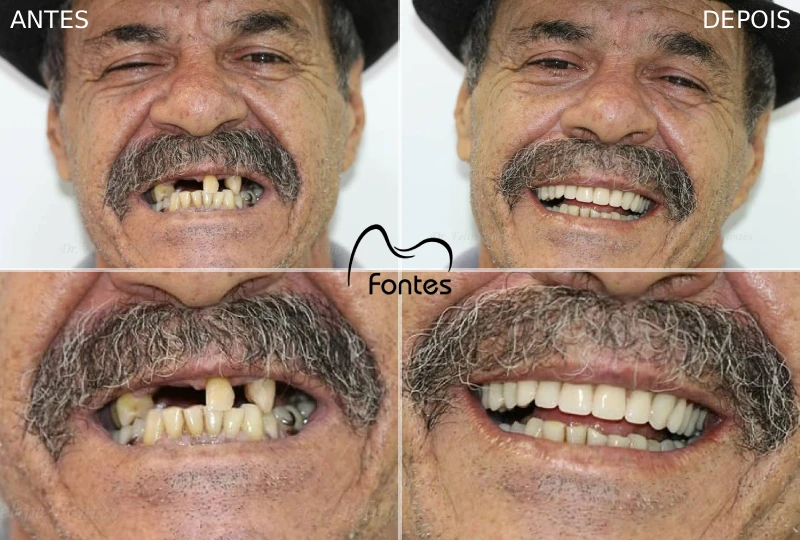
A full denture is indicated for patients who have lost all the teeth in an arch (upper, lower or both). It is a removable prosthesis that rests on the gums and jawbone.
Although it is one of the most traditional and affordable options, it can cause some discomfort and instability, especially if it is not well fitted. However, with advances in dentistry, dentures are becoming increasingly modern and comfortable.
Today it is possible to make dentures based on digital scans, ensuring a more precise fit and a lower risk of sore spots or difficulty chewing.
Removable partial denture (RPD)
A removable partial denture is recommended for patients who still have some natural teeth. It consists of a metal or acrylic framework that rests on the remaining teeth, replacing those that have been lost.
This type of prosthesis is a more affordable alternative to fixed prostheses and can be removed by the patient for cleaning.
Some models have metal clasps, while more modern ones are made with materials that blend in better in the mouth, offering greater discretion.
Fixed prosthesis (dental bridge)
Fixed prostheses, also known as dental bridges, are attached to prepared natural teeth or to implants. They offer greater stability, comfort and aesthetics, as they cannot be removed by the patient.
This is a widely used solution to replace one or more adjacent missing teeth, as long as there are healthy teeth around them to serve as support.
Their main advantage is that they feel very close to natural teeth, making chewing and speaking more comfortable.
Implant-supported prosthesis
An implant-supported prosthesis is considered one of the most modern and effective options. In this case, small titanium posts are surgically placed in the jawbone to replace the tooth root, serving as a base for the prosthesis.
It can be a crown (for a single tooth), a bridge (for several teeth) or even a full prosthesis (such as a fixed full-arch prosthesis or an overdenture). This type of prosthesis ensures excellent stability, comfort and a natural appearance.
In addition, the implant helps preserve the local bone, preventing the bone resorption that commonly follows tooth loss.
Fixed full-arch prosthesis (All-on-X)
A fixed full-arch prosthesis is a full prosthesis that is screwed onto implants. It is indicated for patients who have lost all their teeth and want a fixed, permanent solution with high stability and aesthetics.
It is usually placed on 4 to 6 implants, depending on the patient’s bone density, and provides a completely natural smile, with the freedom to eat and speak confidently.
Overdenture
An overdenture is also a full prosthesis, but unlike a conventional denture, it snaps onto implants, offering greater firmness and retention. It can be removed by the patient, making cleaning easier.
It is a hybrid between fixed and removable options, combining the best of both worlds: stability with convenience.
How to choose the best prosthesis for your case
Choosing the ideal prosthesis depends on several factors, including:
- Number of missing teeth
- Condition of the remaining teeth
- Gum and bone health
- Lifestyle and personal preferences
- Available budget
That is why a complete dental assessment is essential. At Fontes Odontologia, we carry out a thorough clinical examination and imaging exams, such as 3D CT scans, to identify the best alternative for each patient.
The most suitable prosthesis is the one that offers a balance between aesthetics, function, comfort and durability.
In addition, digital planning lets you see in advance what the result will look like, increasing the predictability and safety of the treatment.
How are dental prostheses placed at Fontes Odonto?
At Fontes Odontologia, the entire dental prosthesis process is carried out with cutting-edge technology and specialist follow-up.
Treatment steps:
- Initial assessment and diagnosis: we analyze the condition of the dental arch, gums and bone through clinical and imaging exams.
- Personalized planning: with the help of digital planning, we develop a tailor-made strategy for each patient.
- Making the prosthesis: the prosthesis is custom-made in a specialized laboratory using high-quality, aesthetic materials.
- Try-in and adjustment: we carry out tests to ensure proper fit, comfort and aesthetics.
- Final placement: the prosthesis is securely attached, whether by cementation, screws or attachments.
- Follow-up and adjustments: after placement, we follow up with the patient to ensure adaptation and make adjustments when needed.
Our commitment is to deliver a functional, beautiful and long-lasting smile, with maximum comfort and safety.
Care and maintenance of dental prostheses
The durability of a dental prosthesis depends directly on the care taken by the patient. Here are some important recommendations:
Daily cleaning
- Brush the prosthesis with a soft brush and mild soap.
- If it is removable, take it out after meals and before bed to clean it.
- Avoid regular toothpaste, which can scratch the material.
Storage
- Store removable prostheses in a dry container or in a suitable solution, as instructed by your dentist.
Regular dental visits
- Even with a prosthesis, a dental check-up every 6 months is essential to assess the health of the gums, any remaining teeth and the fit of the prosthesis.
Diet
- Avoid very hard foods in the first few weeks.
- Over time, chewing becomes natural and secure.
Adaptation
- It is common to feel slight discomfort at first.
- If you experience pain, excessive movement or difficulty speaking, book an appointment so the necessary adjustments can be made.
Book an appointment and discover the best dental prosthesis solution for you!
Have you lost one or more teeth and want to restore your smile safely, aesthetically and functionally?
At Fontes Odontologia, you will find everything you need to transform your oral health and smile with confidence again.
We offer complete, personalized care, focused on modern and effective solutions in dental prosthetics and implant dentistry. Here, every detail is designed to ensure excellent treatment that combines comfort, technology and long-lasting results.
Why choose Fontes Odontologia?
- Highly qualified professionals specialized in oral rehabilitation
- Cutting-edge technology, such as digital CT scans and 3D planning
- Humane care, with active listening and a focus on your needs
- Modern, safe and welcoming spaces, ready to receive you well
- Dental prostheses with a natural aesthetic finish and a precise fit
Whether you want to restore chewing function, improve speech or bring back the beauty of your smile, we are ready to recommend the best dental prosthesis for your case, based on an accurate diagnosis and an individualized treatment plan.
Book your assessment and find out how Fontes Odontologia can help you smile confidently again!
Frequently asked questions about dental prostheses
Sedation for Surgery
An anesthetic technique that lowers a person's level of consciousness to reduce anxiety and improve patient comfort during unpleasant procedures.

Personalized Treatment
With the health of the body and the individual in mind, we offer treatments suited to the widest range of dental problems.

Intensive Care
To speed up treatment, we offer procedures designed to achieve a high degree of effectiveness in the shortest possible time.

Modern Equipment
For a better patient experience and quality of service, we offer high-tech equipment and the most modern techniques in every specialty.