

Botox (Botulinum Toxin) 📍 Ipanema - RJ
Aesthetics, Bruxism and Orofacial Harmonization
In short
- Botulinum toxin relaxes specific muscles to soften expression lines and treat bruxism and a gummy smile.
- The first effects appear in 3 to 5 days and the result lasts 4 to 6 months.
- In dentistry, Botox is part of orofacial harmonization, a specialty recognized by Brazil’s Federal Council of Dentistry.
Among the most frequently performed treatments at Fontes Odontologia Clinic, in Ipanema (Rio de Janeiro), is Botox, for both aesthetic and therapeutic purposes. Botulinum toxin has become increasingly popular thanks to its versatility, delivering visible, effective results in many areas of dentistry and facial harmonization.
What is Botox and how does it work?
Botox, or botulinum toxin, is a substance widely used in health care and aesthetics because of its many benefits and applications. Initially known for its ability to smooth wrinkles and expression lines, Botox also plays a fundamental role in treating a range of medical and dental conditions.
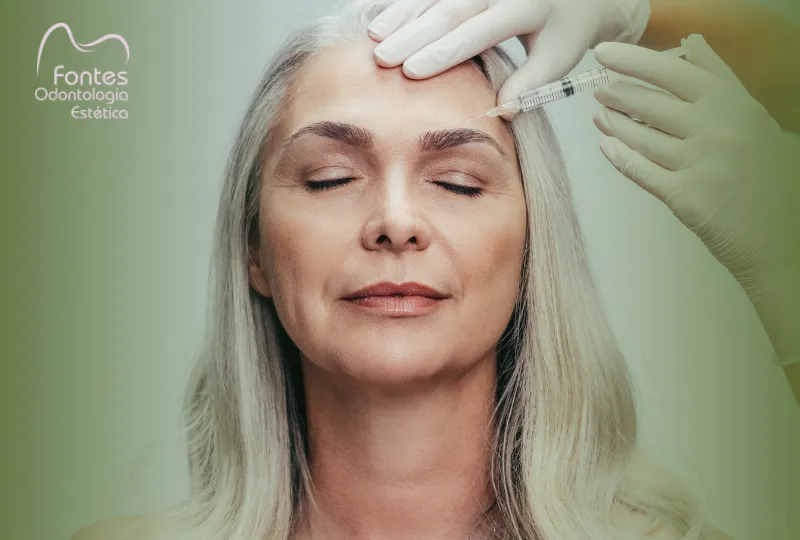
In aesthetics, botulinum toxin is injected into strategic areas of the face to minimize the signs of aging, preventing new wrinkles from forming and giving a younger, more rested appearance. It works by temporarily blocking the nerve impulses responsible for muscle contraction, which relaxes the muscles and reduces expression lines.
In recent years, botulinum toxin has become an essential tool not only for cosmetic procedures but also for a range of therapeutic approaches, offering benefits that go beyond appearance and directly affect patients’ health and well-being.
The effect of Botox is temporary, lasting on average three to six months. This can be influenced by several factors, such as the patient’s metabolism, lifestyle and aftercare. To maintain the desired results, periodic re-application is recommended, always performed by a qualified professional.
In dentistry and orofacial harmonization, Botox has been widely used to balance the aesthetics and function of the face. It can be used to reduce how much gum shows when smiling (gummy smile) and even to redefine the facial contour, giving a more harmonious, symmetrical appearance.
Another important point is its effectiveness in controlling bruxism, a problem that can cause tooth wear, jaw pain and frequent headaches. Injecting botulinum toxin into the muscles responsible for excessive contraction helps relax them, providing significant relief for patients with this condition.
Who is Botox indicated for?
Botox is indicated for adults who want to soften expression lines and for those who need therapeutic treatment in the orofacial region, such as for bruxism and teeth clenching, always after a professional assessment.
Botox for Aesthetics and Orofacial Harmonization
- Smoothing wrinkles and expression lines: People who want to soften signs of aging, such as lines on the forehead, between the eyebrows (glabella) and around the eyes (crow’s feet), can benefit from botulinum toxin. Botox relaxes the muscles responsible for these lines, giving a younger, more rested look.
- Preventing premature aging: As well as smoothing existing wrinkles, botulinum toxin is widely used as a preventive treatment. Applied in younger patients, it stops expression lines from becoming permanent, slowing down skin aging.
- Correcting a gummy smile: For patients who show a lot of gum when they smile, Botox can help balance the look of the smile by reducing excessive contraction of the muscle that lifts the upper lip. This technique creates a more harmonious, natural smile.
- Improving facial symmetry: In cases of asymmetry caused by facial paralysis, after-effects of a stroke or other neuromuscular conditions, botulinum toxin can be used to balance the muscles and bring greater harmony to the face, improving the appearance and function of the affected muscles.
Botox in Therapeutic and Dental Treatments
- Treating bruxism and TMD (Temporomandibular Disorder): Botox can be used to reduce muscle tension in the jaws, relieving teeth clenching and protecting the tooth structure from wear. It also helps treat TMD, reducing muscle pain and improving the function of the temporomandibular joint.
- Relieving headaches and migraines: Studies indicate that Botox can help treat chronic migraine by relaxing the muscles and reducing the tension responsible for intense pain. Patients with tension headaches can also benefit from botulinum toxin.
- Treating muscle spasms and dystonias: Botox is widely used in neurology to treat conditions such as blepharospasm (involuntary eyelid spasms), cervical spasms and other muscle disorders that affect the patient’s quality of life.
- Correcting sialorrhea (excessive salivation): Botox can also be used to control excessive saliva production in patients with neuromuscular difficulties, improving comfort and oral function.
Advantages of Botulinum Toxin
Botox offers a range of aesthetic and functional benefits, making it a safe, effective option for those who want to improve their appearance or treat various clinical conditions. Its main advantages include:
A Safe, Simple Procedure
- Minimally invasive procedure: Botulinum toxin is applied through small injections, with no incisions or surgery, which reduces the risk of complications and is more comfortable for the patient.
- Quick, painless sessions: The procedure takes just a few minutes, usually without anesthesia. In some cases, a topical anesthetic may be used for extra comfort.
- Low risk of side effects: When applied by a qualified professional, Botox has few side effects, which are usually mild and temporary, such as small bruises or swelling in the treated area.
Efficient, Natural Results
- Fast, effective results: The effects begin to appear two to seven days after application, with a visible improvement in appearance and muscle function, whether smoothing wrinkles or relieving medical conditions such as bruxism and migraines.
- A natural, harmonious look: When properly applied, Botox preserves facial expressiveness, avoiding an artificial or frozen look. The goal is subtle, balanced rejuvenation.
- Short recovery time: Unlike other cosmetic procedures, Botox requires no downtime, allowing patients to return to their daily activities immediately after the application. Only a few simple precautions, such as avoiding intense physical exertion in the first 24 hours, are recommended for the best results.
Prevention and Personalization
- Preventing premature aging: Preventive use of botulinum toxin helps slow the formation of wrinkles and expression lines, stopping them from deepening over time. Younger patients can use Botox as a strategy to keep their skin healthy and smooth for longer.
- Versatility: It can be applied to different areas of the face and body, meeting both aesthetic and therapeutic needs. Botox is used on the forehead, around the eyes, on the chin and on the jaw.
- Correcting facial asymmetry: Botulinum toxin is a great ally in orofacial harmonization, helping to balance the muscles and improve facial symmetry.
- Adjustable, reversible treatment: The effect of Botox is temporary, lasting three to six months, so the patient has control over how often it is applied and the dose used. If a subtler or stronger effect is desired, treatment can be adjusted to individual needs.
Once you get Botox, do you have to keep getting it?
One of the biggest myths about Botox is that after the first application, you will have to keep having it forever. Many people mistakenly believe that if they stop using botulinum toxin, their skin may get worse or their wrinkles will return more strongly, which is not true.
In reality, Botox has a temporary effect, and the decision to have it again is entirely up to the patient. If someone chooses not to continue, the treated muscles gradually regain their normal movement, and wrinkles and expression lines may reappear over time. However, this does not mean the skin will be damaged in any way or look worse than before treatment.
Another important point is that, after a few sessions, many patients find that the treated muscles naturally weaken, reducing the strength of the contractions that cause dynamic wrinkles. This can make expression lines less noticeable even without continued botulinum toxin, so the intervals between sessions become longer and longer.
In addition, botulinum toxin can have a preventive effect: by relaxing the muscles responsible for expression lines, it stops them from deepening and becoming permanent. In this way, Botox can be used both to treat existing wrinkles and to delay new ones, keeping a younger, more rested appearance over time.
That is why Botox should be seen as a tool that gives patients freedom, allowing them to choose when and how to have it, according to their needs and goals.
Botox or fillers: when to use each?
Although Botox and fillers are often confused, they serve different purposes:
- Botox (botulinum toxin): Used to relax the muscles responsible for dynamic wrinkles (those that appear when the face moves, such as when smiling or frowning).
- Dermal fillers: Use substances such as hyaluronic acid to add volume to areas of the face, smooth deep wrinkles and improve facial contours.
When to choose each one?
- Botox: Indicated for treating dynamic wrinkles and preventing new expression lines.
- Fillers: Recommended for restoring volume in areas such as the cheekbones, nasolabial folds and lips.
In many cases, the two treatments can be combined to enhance the results and provide a more complete rejuvenating effect.
Comparison: Botox vs dermal fillers
| Criterion | Botox (botulinum toxin) | Fillers (hyaluronic acid) |
|---|---|---|
| How it works | Relaxes the muscles | Restores volume and fills folds |
| Main indication | Dynamic wrinkles, bruxism, gummy smile | Lips, under-eye area, folds and facial contour |
| Onset | 3 to 5 days | Immediate |
| Average duration | 4 to 6 months | Varies by product and area |
Frequently asked questions about Botox
How long does Botox last?
The effect of botulinum toxin usually lasts 4 to 6 months, depending on the area treated, the dose and each patient’s metabolism.
How soon do Botox results appear?
The first effects appear 3 to 5 days after the injection, and the full result is seen at around 15 days, when the follow-up appointment takes place.
Does Botox hurt?
The injections are quick and use very fine needles; any discomfort is mild and brief. A topical anesthetic can be used when needed.
What aftercare is needed after Botox?
For the first 4 hours, avoid lying down or massaging the area; for the first 24 hours, avoid intense exercise, excessive heat and alcohol.
Can a dentist administer Botox?
Yes. In Brazil, the Federal Council of Dentistry recognizes orofacial harmonization as a specialty, and dentists can apply botulinum toxin for aesthetic and therapeutic purposes in the orofacial region.
📚 Read also: Bruxism: causes, symptoms and treatment · Bruxism night guards: which to choose
Why have the procedure at Fontes Odontologia?
At Fontes Odontologia, we offer specialized, personalized care to ensure maximum safety and satisfaction for our patients. We work with high-quality products and modern techniques to ensure a natural, harmonious result.
What sets us apart is our multidisciplinary approach, with professionals trained in Orofacial Harmonization who have an in-depth understanding of facial anatomy, delivering safe, aesthetically balanced results.
What sets us apart:
- Highly qualified professionals
- Personalized care
- Certified, safe materials
- Detailed planning for each patient
- A modern, comfortable environment
If you want to improve your facial aesthetics or treat a dysfunction safely and efficiently, book an assessment with us and find out how Botox can transform your appearance and quality of life!
Pre-book an Appointment
Contents
Botox Clinic in Ipanema
At Fontes Odontologia, our Botox clinic in Ipanema applies botulinum toxin for aesthetic and therapeutic purposes as part of orofacial harmonization. A dentist's knowledge of the facial muscles allows precise doses and natural results, without a frozen look.
Orofacial Harmonization
We soften expression lines on the forehead, between the brows and around the eyes while keeping the face natural.

Botox for Bruxism
The toxin reduces the strength of the chewing muscles, relieving teeth grinding and clenching.

Botox for a Gummy Smile
Targeted doses in the upper lip reduce how much gum shows when smiling.

Precise, Safe Dosing
We plan injection points and amounts according to each patient's anatomy, with a follow-up assessment.