Oral health goes far beyond the teeth. The gums and the tissues that support the teeth also need constant attention to avoid serious problems — and periodontitis is one of the main ones. It is an inflammatory, infectious disease that affects the tissues supporting the teeth and can lead to tooth loss if not properly treated.
As well as affecting the look of the smile, periodontitis can affect chewing, cause persistent bad breath and even impact the body’s general health. That is why understanding its signs, causes and treatments is essential to maintaining good oral health.
In this article, you will learn what periodontitis is, how to identify it, what the risk factors are, the main treatments available and what to do to prevent it.
What is periodontitis?
Periodontitis is what untreated gingivitis develops into. While gingivitis involves superficial, reversible inflammation of the gums, periodontitis affects the deeper supporting structures — such as the alveolar bone and the periodontal ligament — which keep the teeth firmly in place.
When plaque is not properly removed by brushing and flossing, it builds up and hardens into tartar. This creates ideal conditions for pathogenic bacteria to multiply, releasing toxins that cause chronic inflammation. Over time, this inflammation leads to the progressive destruction of the tissues supporting the teeth, affecting not only gum health but also the stability of the teeth.
As periodontal disease advances, the signs become more evident and worrying. The main consequences of periodontitis include:
- Gum recession, making the teeth look longer;
- Periodontal pockets (spaces between the tooth and gum where bacteria build up);
- Progressive bone loss;
- Tooth mobility, with teeth feeling “loose” or shifting easily;
- In more severe cases, permanent tooth loss.
Because it is often silent in its early stages, periodontitis is frequently only diagnosed when there is already significant damage. That is why regular dental visits and a good oral hygiene routine are essential to detect and treat the disease early.
Main symptoms of periodontitis
Periodontitis can progress silently, especially in its early stages, as it does not always cause pain. As a result, many people only realize something is wrong when the disease is already more advanced, with significant damage to the bone and supporting tissues.
Watching for the signs is essential to seek treatment as soon as possible. The most common symptoms of periodontitis include:
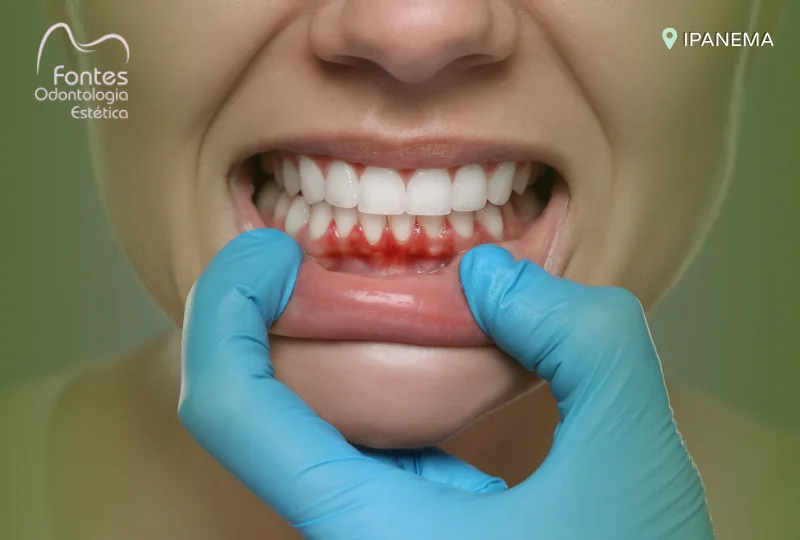
- Bleeding gums when brushing or flossing — one of the first signs of inflammation;
- Swollen, red or tender gums, indicating active inflammation;
- Gum recession, making the teeth look longer and exposing part of the root;
- Persistent bad breath (halitosis), even with a good hygiene routine;
- Teeth that feel “loose” or move, a sign that the supporting structures are compromised;
- Periodontal pockets noticeable when flossing or brushing, caused by the gum pulling away from the tooth;
- Pus between the teeth and gums, especially in more advanced cases, indicating active infection.
If you have one or more of these symptoms, it is essential to see a dentist specialized in periodontics for a detailed assessment. Early diagnosis is decisive in controlling the disease, preserving the supporting tissues and preventing tooth loss.
Risk factors for periodontitis
Although poor oral hygiene is the main risk factor for periodontitis, several other factors can also significantly increase the likelihood of developing periodontal disease. Knowing and controlling them is essential to protect your gum health:
- Smoking – One of the most important aggravating factors. Smoking impairs healing, reduces tissue oxygenation and weakens the local immune response, making the gums more vulnerable to bacteria.
- Systemic diseases, such as poorly controlled diabetes, directly affect oral health. High blood sugar hinders healing and encourages infection, increasing the risk of severe gum inflammation.
- Cardiovascular disease – Scientific studies indicate that the chronic inflammation caused by periodontitis can affect the health of the heart and blood vessels. Patients with advanced gingivitis or periodontitis are at greater risk of developing cardiovascular diseases such as hypertension, atherosclerosis and heart attacks. This is because oral inflammation can contribute to systemic inflammation, negatively affecting the circulatory system. So caring for your gums protects not only your teeth, but may also benefit your cardiovascular health.
- Genetic predisposition – Some people are more susceptible to periodontal disease due to hereditary traits that affect the inflammatory and immune response.
- Chronic stress – Constant stress can weaken the immune system, making it harder for the body to fight periodontal bacteria, and can encourage habits such as teeth clenching.
- Pregnancy and hormonal changes – Periods of hormonal change, such as pregnancy or menopause, can increase gum sensitivity and make inflammation easier, requiring extra care.
- Certain medications – Some drugs reduce saliva production (making plaque build-up easier) or cause gum overgrowth, making hygiene harder and encouraging inflammation.
- Bruxism and malocclusion – Clenching or grinding the teeth and bite problems can overload the supporting tissues, speeding up the progression of periodontal disease.
Identifying and controlling these risk factors, with dental and medical follow-up, is essential to prevent periodontitis from developing or getting worse and to keep your teeth and gums healthy in the long term.
Available treatments
Periodontitis treatment is tailored to the stage of the disease, the severity of the infection and the damage to the supporting tissues, such as bone and the periodontal ligament. The main goal is to eliminate the bacterial infection, control the inflammation and stop bone loss from progressing, preserving the teeth and oral health in the long term.
Here are the main therapeutic approaches:
1. Scaling and root planing (non-surgical treatment)
This is the first line of treatment for most patients.
The procedure involves the thorough removal of plaque and tartar both on the surface of the teeth and below the gum line, where bacteria build up most. The tooth roots are then planed smooth, making the surface less favorable for bacteria to reattach.
This can be done with hand or ultrasonic instruments and is usually performed under local anesthesia for the patient’s comfort. In many cases, this approach alone is enough to control the disease in its early and moderate stages.
2. Periodontal surgery
When periodontitis is more advanced, with deep periodontal pockets, significant bone loss or areas that are hard to clean, surgery may be needed.
In these cases, the dentist makes a controlled opening in the gum to reach the affected areas in depth, completely remove bacteria and tartar and reshape the damaged alveolar bone.
In some situations, bone or gum grafts are recommended to rebuild lost structures and restore support for the teeth. These surgeries help restore periodontal health and improve the stability of the teeth.
3. Laser treatment
Laser technology has become an important ally in periodontal treatment. It can be used to complement scaling or surgery, helping to eliminate bacteria precisely, significantly reduce inflammation and even stimulate tissue regeneration.
Its advantages include a less invasive procedure, faster recovery, less bleeding and greater comfort for the patient during and after treatment.
4. Bite and habit control
In many cases, mechanical factors contribute to the progression of periodontitis, such as bruxism (teeth grinding) or malocclusion.
These habits can place excessive load on the teeth and periodontal structures, speeding up bone destruction.
To correct this, the dentist may recommend a night guard (a stabilizing splint worn at night), as well as bite adjustments to balance the bite and protect the periodontium.
5. Regular maintenance
After the initial phase of treatment, it is essential to keep up a continuous periodontal maintenance program, with regular professional cleanings, reinforcement of oral hygiene techniques and frequent clinical follow-up.
This stage is essential to prevent the disease from coming back, as periodontitis is a chronic condition that requires constant vigilance. The frequency of maintenance appointments varies from case to case, and may be every three months, six months or once a year.
How to prevent periodontal disease
Prevention is undoubtedly the most effective and economical way to fight periodontitis. Adopting the right oral hygiene habits and keeping up a regular care routine can stop gingivitis from progressing to more advanced stages of periodontal disease, preserving your teeth and gum health throughout life.
Here are the main preventive measures:
- Brush correctly and often: brush your teeth at least twice a day, using a soft-bristled brush and gentle movements so as not to hurt the gums. Good brushing technique is essential to remove plaque without causing gum recession.
- Floss daily: floss reaches areas a toothbrush cannot, removing debris and plaque between the teeth and preventing the build-up of bacteria that cause gum inflammation.
- See your dentist regularly: regular check-ups and professional cleanings, ideally every six months, make it possible to identify any gum changes early and remove tartar that ordinary brushing cannot.
- Avoid smoking: smoking is one of the main risk factors for periodontitis. It impairs blood flow to the gums, hinders healing and masks signs such as bleeding, delaying diagnosis.
- Control systemic diseases: conditions such as poorly controlled diabetes significantly increase the risk of periodontal disease. Keeping these diseases under control is essential to protect oral health.
- Watch for early signs: frequent bleeding gums, persistent bad breath and swollen or receding gums are important warnings. Seeing a dentist as soon as these symptoms appear stops the problem from advancing.
With a consistent oral hygiene routine combined with regular professional follow-up, it is entirely possible to prevent periodontitis and keep your gums healthy for many years. Prevention is always simpler, quicker and less invasive than treating the damage caused by periodontal disease.
👉🏻 Avoid tooth loss! Book your appointment to treat periodontitis now!
Periodontitis is a silent disease that often progresses without pain in its early stages — but it can have serious consequences if not treated in time, such as gum recession, loose teeth and even permanent tooth loss.
The good news is that with early diagnosis and proper treatment, it is entirely possible to control the disease, preserve your natural teeth and keep your gums healthy for many years.
At Fontes Odontologia, we offer complete, distinctive care:
- A team specialized in periodontics, ready to handle everything from early to the most advanced cases safely and with excellence.
- Imaging exams carried out at the clinic itself, which speeds up the process and ensures accurate diagnoses.
- Modern technology that allows changes to be identified early and less invasive, more effective procedures to be performed.
We are located in Ipanema, Rio de Janeiro, ready to care for your oral health with attention, experience and kindness.
🗓️ Book your assessment and avoid future complications. Treating periodontitis today is an investment in healthy teeth, firm gums and a beautiful smile for much longer.
📍 Address: R. Visc. de Pirajá, 351 – room 801 – Ipanema, Rio de Janeiro
🦷 Related treatment in Ipanema: Bone and Gum Grafts · Cosmetic Gum Surgery · Dental Implants