Canker sores are small ulcers in the mouth that, although benign, can cause intense pain and discomfort when speaking, eating and even smiling.
Anyone who has had a canker sore flare-up knows how this seemingly simple condition can affect day-to-day well-being. These ulcers are a common manifestation of aphthous stomatitis and affect people of all ages, from children to adults.
Although they usually go away on their own within a few days, it is important to understand their causes, treatment methods and effective ways to relieve the pain. In addition, identifying possible triggers can help prevent recurrence and promote even better oral health.
In this article, we explore everything about canker sores in detail: what they are, their main causes, the treatments available, how to prevent them and when an assessment by an oral health professional is recommended.
ℹ️ What are canker sores?
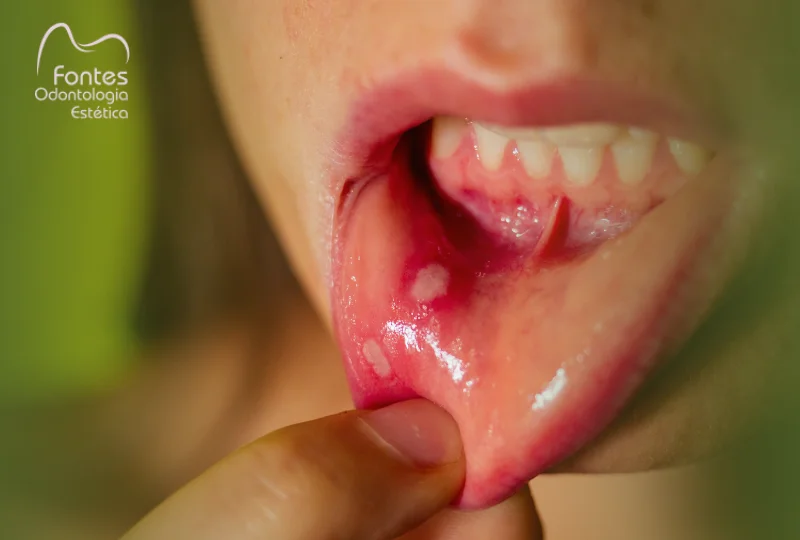
Canker sores, also called mouth ulcers, are small, shallow sores that form on the lining of the mouth. They are characterized by:
- Well-defined edges;
- A whitish or yellowish center;
- A red halo around the sore;
- Sharp pain, especially on contact with acidic, salty or spicy foods.
Although they are often confused with viral lesions such as cold sores, canker sores are completely different in nature: they are not contagious and are not caused by a virus.
Canker sores can be classified into three types:
- Minor canker sores: the most common form, small (less than 1 cm), heal on their own within 14 days without scarring.
- Major canker sores: larger and deeper sores that may take longer to heal and sometimes leave small scars.
- Herpetiform canker sores: multiple small ulcers that cluster together, giving the impression of a large ulcerated area, although they have nothing to do with the herpes virus.
This classification helps explain why some canker sores hurt more or take longer to heal.
It is important to remember that isolated episodes of canker sores are considered normal, but frequent or numerous sores may indicate the need for a more in-depth medical investigation.
🤔 Main causes of canker sores
The causes of canker sores are multifactorial and not yet fully understood. Several factors are known to act alone or together to trigger the formation of sores. Here are the most common:
Local trauma
Injuries to the oral mucosa caused by:
- Accidental bites;
- Overly vigorous brushing;
- Irritation from dentures or braces;
- Eating hard or sharp foods (such as toast, nuts and popcorn).
Immune changes
Situations that lower immunity, such as the flu, emotional stress, severe fatigue or the use of immunosuppressive medication, encourage canker sores to appear.
Stress and emotional factors
Chronic stress is one of the main factors associated with aphthous stomatitis. This is due to the release of hormones that affect the immune system and make the lining of the mouth more susceptible to sores.
Nutritional deficiencies
A lack of important nutrients such as iron, vitamin B12, folic acid and zinc impairs the renewal of cells in the mouth lining, encouraging ulcers to appear.
Genetic predisposition
Studies show that canker sores may have a genetic component, with a higher incidence in people with a family history of recurrent canker sores.
Irritating foods
Eating certain foods, such as chocolate, coffee, citrus fruits, tomatoes, peanuts and spicy foods, can trigger or worsen the condition.
Systemic diseases
Conditions such as celiac disease, Crohn’s disease, systemic lupus erythematosus and HIV infection may present canker sores as an associated symptom.
🧬 Treatment options for canker sores
Treatment for canker sores mainly aims to speed up healing and relieve pain, since most sores are self-limiting and tend to disappear within about 7 to 14 days. However, in cases of intense pain, very large sores or frequent recurrence, professional intervention is recommended.
Here are the main treatment options:
Topical medications
- Local anesthetics (such as lidocaine) help reduce pain while eating and speaking.
- Topical anti-inflammatories, such as corticosteroids, reduce inflammation and speed up healing.
Mouthwashes
- Solutions based on chlorhexidine, sodium bicarbonate or other antimicrobial substances help prevent secondary infections and promote healing.
Laser therapy
- Low-level laser therapy speeds up healing, relieves pain almost instantly and shortens recovery time. It is an option used in some clinical settings to reduce pain and speed up healing, following professional assessment.
Nutritional supplements
- If vitamin or mineral deficiencies are detected, supplements may be recommended to correct them and prevent sores from coming back.
Systemic medication
- In cases of severe aphthous stomatitis or stomatitis associated with systemic diseases, immunomodulatory medication may be necessary, always under medical supervision.
🛡️ How to prevent canker sores
Preventing canker sores involves controlling the predisposing factors. Some effective tips include:
- Practice good oral hygiene: use soft-bristled brushes and avoid injuring the lining of the mouth.
- Eat a balanced diet: rich in fruit, vegetables and sources of vitamins and minerals.
- Reduce stress: relaxation techniques, physical exercise and psychotherapy are important allies.
- Avoid irritating foods: such as acidic, hot and very spicy foods.
- Keep up with your oral health: regular dental visits help identify possible problems early.
- Use mouthguards: if you play contact sports, a mouthguard can prevent injuries.
In addition, if you wear dentures or braces, make sure they fit properly so they do not cause sores.
🧑🏻⚕️ Should I see a dentist about canker sores?
Although many canker sores go away on their own, there are situations in which professional follow-up is essential. See a dentist if:
- The sores last more than two weeks;
- The sores are very large or extremely painful;
- Sores appear frequently or several appear at once;
- There are signs of secondary infection (pus, fever, marked swelling);
- You have difficulty eating or speaking;
- The sores are associated with other systemic symptoms, such as persistent fever or weight loss.
🗓️ When a professional assessment is recommended
In many cases, canker sores go away on their own and pose no health risk.
However, when the sores are frequent, very painful, last more than two weeks or appear together with other symptoms, an assessment by an oral health professional or doctor is recommended for proper investigation.
If you feel you need professional advice, you can contact our dental clinic in Ipanema using the form available on the website.
🦷 Related treatment in Ipanema: Canker Sore Treatment